Mario Incandenza, the multiply-challenged middle Incandenza bro, is my new guru.
“[Mario’s] prayers take almost an hour and sometimes more and are not a chore. He doesn’t kneel. It’s more like a conversation. And he’s not crazy, it’s not like he hears anybody or anything conversing back with him, Hal’s established.
Hal had asked him when he’ll start coming back to their room to sleep, which made Mario feel good.
He keeps trying to imagine Madame Psychosis — whom he imagines as being very tall — lying in an XL beach chair on a beach smiling and not saying anything for days, resting. But it doesn’t work very well.
He can’t tell is Hal is sad. He is having a harder and harer time reading Hal’s state of mind or whether he’s in good spirits. This worries him. He used to be able to sort of preverbally know in his stomach generally where Hal was and what he was doing, even if Hal was far away and playing or if Mario was away, and now he can’t anymore. Feel it. THis worries him and feels like when you’ve lost something important in a dream and you can’t even remember what it was but it’s important. Mario loves Hal so much it makes his heart beat hard. He doesn’t have to wonder if the difference now is him or his brother because Mario never changes.
He hadn’t told the Moms he was going to walk around after he left her office after their interface: Avril usually tries in a nonintrusive way to discourage Mario from taking walks at night, because he doesn’t see well at night, and the areas around the E.T.A. hill are not the best neighborhood, and there’s no skirting the fact that Mario would be easy prey for just about anybody, physically. And though one perk of Familial Dysautonomia [inability to feel pain very well] is a relative physical fearlessness, Mario keeps to a pretty limited area during insomniacal strolls, out of deference to Avril’s worry. He’ll sometimes walk around the grounds of the Enfield Marine P.H.H. at the bottom of the hill’s east side because they’re pretty much enclosed, the gruonds are, and he knows a couple of the E.M. Security officers from when his father got them to portray Boston police in his whimsical Dial C for Concupiscence; and he likes the E.M. grounds at night because the different brick houses’ window-light is yellow lamplight and he can see people on the ground floors all together playing cards or talking or watching TP. He also likes whitewashed brick regardless of its state of upkeep. And a lot of the people in the different brick houses are damaged or askew and lean hard to one side or are twisted into themselves, through the windows, and he can feel his heart going out into the world through them, which is good for insomnia. A woman’s voice, calling for help without any real urgency — the Moms laughing or screaming at night — sounds from a darkened upper window. And across the little street that’s crammed with cars everybody has to move at 0000h. is Ennet’s House, where the Headmistress has a disability and had had a wheelchair ramp installed and has twice invited Mario in during the day for a Caffeine-Free Millenial Fizzy, and Mario likes the place: it’s crowded and noisy and none of the furniture has protective plastic wrap, but nobody notices anybody else or comments on a disability and the Headmistress is kind to the people and the people cry in front of each other. The inside of it smells like an ashtray, but Mario’s felt good both times in Ennet’s House because it’s very real; people are crying and making noise and getting less unhappy, and once he heard somebody say God with a straight face and nobody looked at them or looked down or smiled in any sort of way where you could tell they were worried inside.”
I think I’ve reached the “exhaustive account of a tennis match” mentioned in Dave Eggers’ foreword, so don’t expect an update from DFW-land
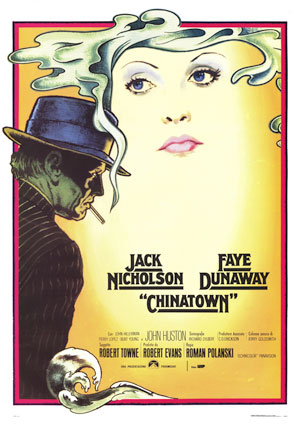 Okay, so maybe I’ve seen (and enjoyed) half the movies on this list, but I still think my iPod has this conspiracy where it makes happy songs come on my shuffle when I am in NO MOOD to be cheered up.
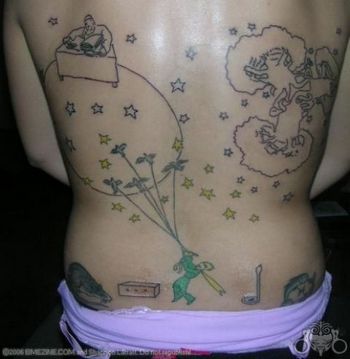


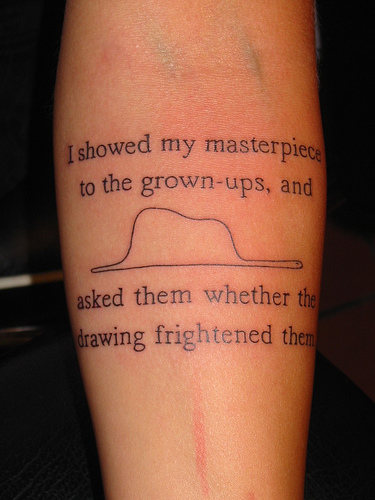
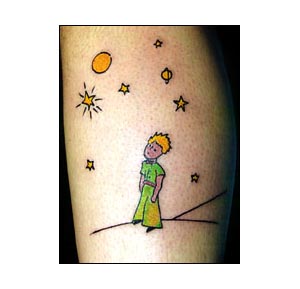 The last one is my favorite. Looking at pictures of tattoos makes me want another one. Not that that should be surprising…
 Itinerantdaughter's Blog