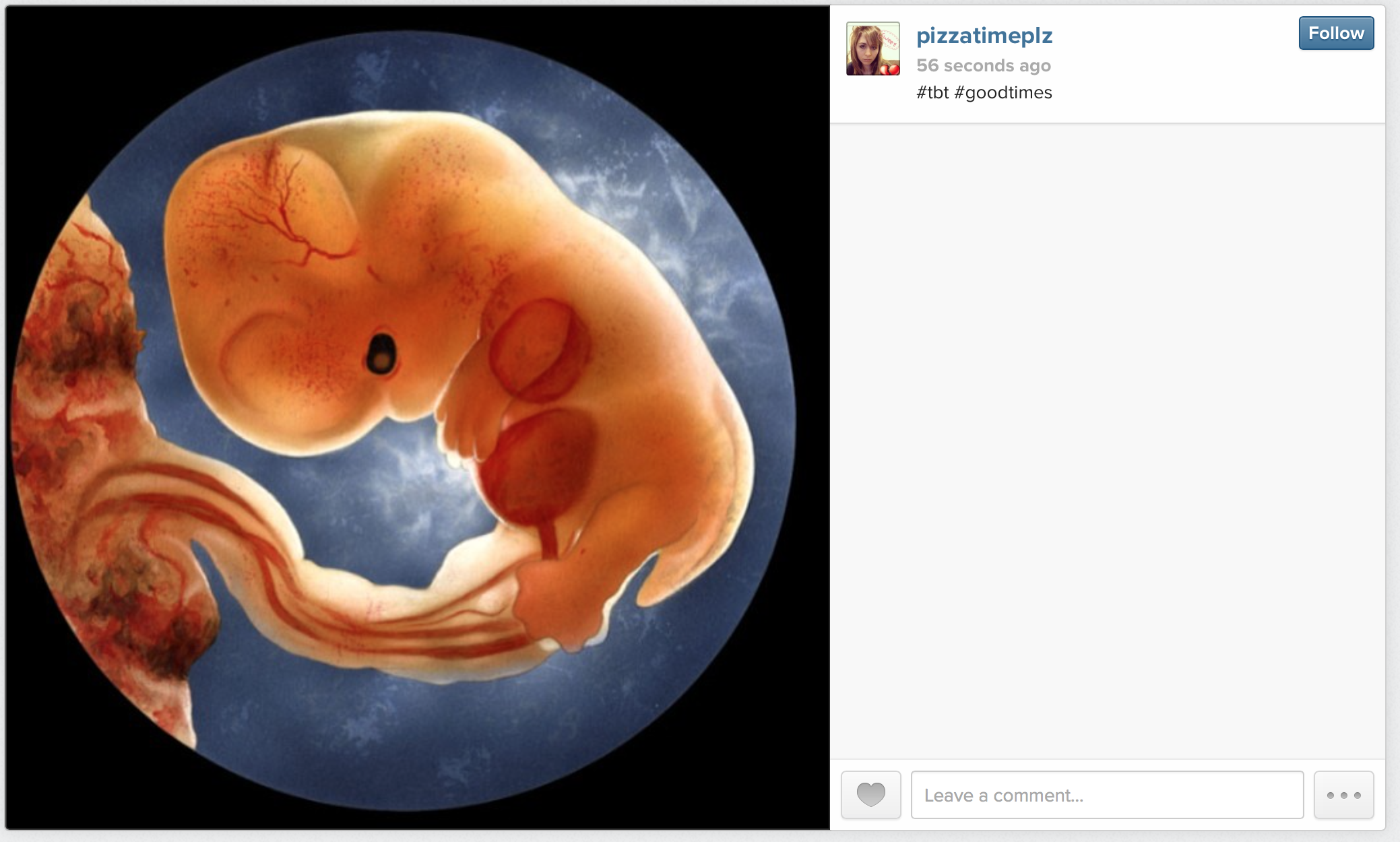
I had grand plans to write something here––a Q&A Fran Lebowitz style, a dissection of a recent funny encounter I had with a child actress, a poem by Elise Cowen (come to think of it, I should have gone that route)––BUT I just spoke to high schoolers for THREE HOURS about my book, life, etc., and I’m totally wiped. All I want right now is meat and a nap. So, with that in mind, the coolest thing I’ve seen in ages:
Archive for the ‘Image Craving’ Category
Oh Jesus
March 21, 2014My Coworker’s Throwback Thursday
March 4, 2014True Detective Mania
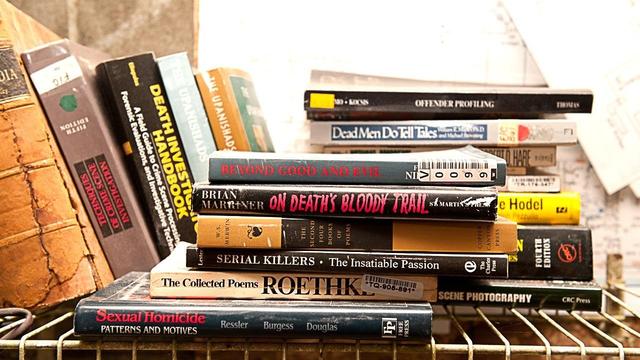
March 4, 2014From Gothamist’s montage of visual clues:
It would appear that Cohle is interested in the work of one of my favorite poets, Theodore Roethke. As nothing in this show is not connected, I’ve taken the liberty of listing a few possible reasons why his collection is included (as opposed to, say, Whitman’s.) None of these feels like THE answer, though, so if you come up with others, please do send along! I’ll be happy to give you credit in my book-in-progress, The Complete Annotated True Detective.
1. Roethke’s breakthrough book was called The Lost Son. A reference to Errol Childress?
2. From perhaps his most famous poem, “My Papa’s Waltz”:
You beat time on my head
With a palm caked hard by dirt
Perhaps a reference to the abuse Errol Childress’ father inflicted on him?
3. The similar eeriness of Roethke’s “Elegy for Jane”:
A wren, happy, tail into the wind,
Her song trembling the twigs and small branches.
The shade sang with her;
The leaves, their whispers turned to kissing,
And the mould sang in the bleached valleys under the rose.
… and the lyrics of The Handsome Family’s “Far From Any Road” (the theme song):
From the dusty May sun
Her looming shadow grows
Hidden in the branches of the poison creosote
She twines her spines up slowly
Towards the boiling sun
And when I touched her skin
My fingers ran with blood
4. Roethke’s major themes: the wildness of nature, and the perils of introspection
5. His obsessive work ethic resembles Cohle’s. From the Poetry Foundation:
Along with these influences, the source of much of Roethke’s poetry was the notes he dutifully kept throughout his life. A measure of the devotion given to his craft can be found in his statement “I’m always working,” and indeed his pockets were seemingly always filled with jottings of striking thoughts and conversations. His less spontaneous reflections found a place in the workbench of his poetry—his notebooks.
6. Of Christ and crucifixion imagery, Roethke was quite familiar. During one of his many nervous breakdowns, he “entered the first class of the 1957-58 University of Washington school year by flinging ‘himself against the blackboard in a kind of crucified pose, muttering incoherently.’
7. Uh, this:
Epidermal Macabre
Indelicate is he who loathes
The aspect of his fleshy clothes, —
The flying fabric stitched on bone,
The vesture of the skeleton,
The garment neither fur nor hair,
The cloak of evil and despair,
The veil long violated by
Caresses of the hand and eye.
Yet such is my unseemliness:
I hate my epidermal dress,
The savage blood’s obscenity,
The rags of my anatomy,
And willingly would I dispense
With false accouterments of sense,
To sleep immodestly, a most
Incarnadine and carnal ghost.
8. And finally, everyone’s favorite color (check out that last line––oo, wee!):
From “The Far Field”
The slightly trembling water
Dropping a fine yellow silt where the sun stays;
And the crabs bask near the edge,
The weedy edge, alive with small snakes and bloodsuckers, —
I have come to a still, but not a deep center,
A point outside the glittering current;
My eyes stare at the bottom of a river,
At the irregular stones, iridescent sandgrains,
My mind moves in more than one place,
In a country half-land, half-water.
My Favorite Scent
February 25, 2014Great Cocktail Names
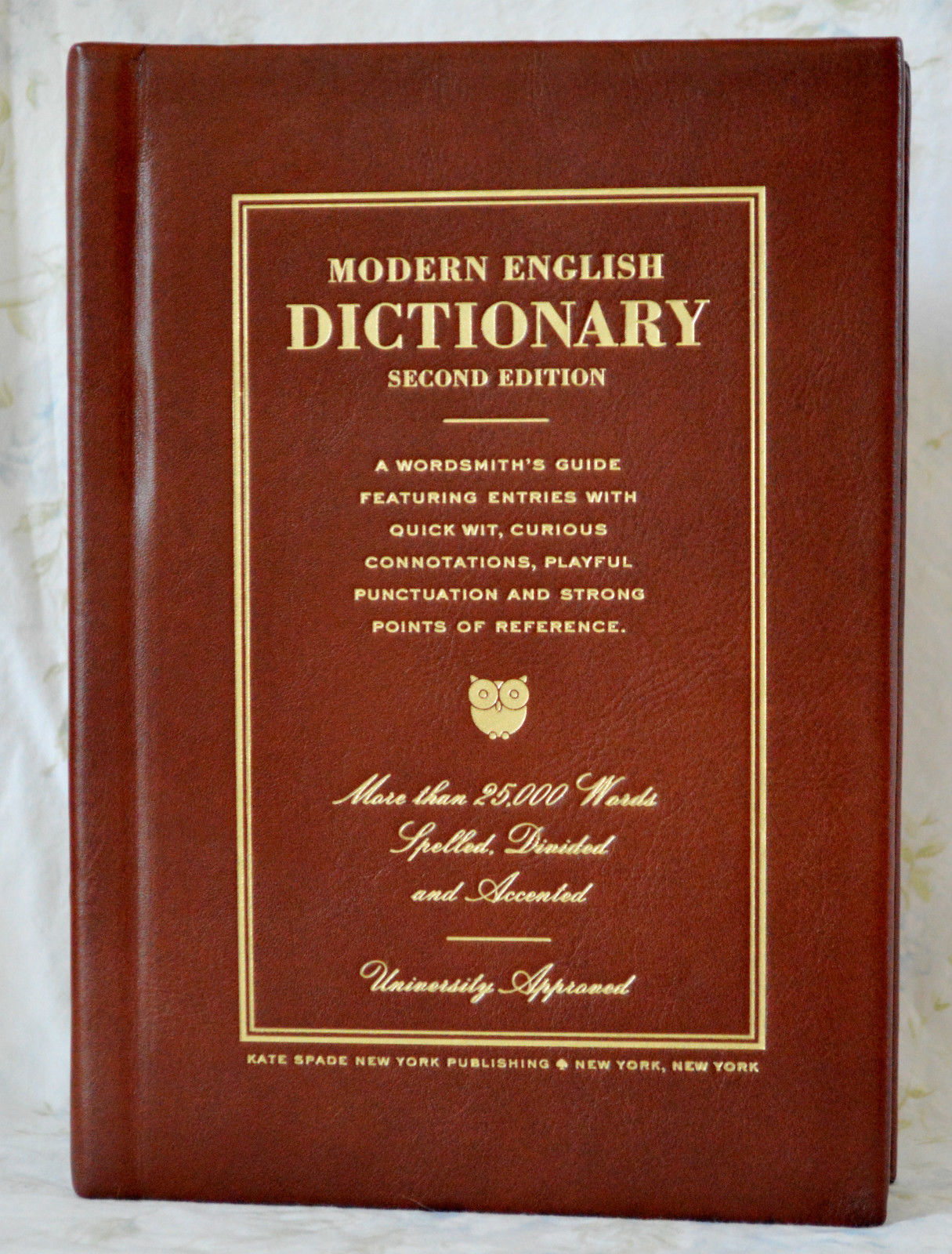
February 18, 2014Dictionary Clutch
February 12, 2014Vinnie’s Says It Best
February 4, 2014Frozen Charlotte
January 26, 2014At a nice store near my house that sells “eclectic curiosities and essential goods,” they have on display a small platter of tiny china dolls, most missing at least one limb. A small card on the table explains that these are “Frozen Charlottes.” Wikipedia (ugh) explains that Frozen Charlottes were between one and eighteen inch-standing, naked figures molded in one piece. They were made between 1850 and 1920, and their name was inspired by the American folk ballad “Fair Charlotte,” about a superficial twat who froze to death because she wouldn’t cover up her pretty, pretty dress with a freaking coat during a polar vortex.
And now, the supremely creepy lumberjack ballad. Take it away, boys!
Young Charlotte dwelt by the mountain side
In a rude and lonely spot;
There was no house for three miles round
Except her father’s cot.
And yet on many a wintry eve
Young swain would gather there;
For her father kept a social abode,
And she was very fair.
He liked to see his daughter dressed
Just like a city belle;
For she was the only child he had,
And he loved his daughter well,
Her hair was black as raven’s wing,
And her skin like lilies fair,
And her teeth were like the pearls so white:
Few with her could compare.
At the village inn fifteen miles off
There’s a merry ball tonight.
Although the air is freezing cold, Our hearts are warm and light.
How eager was her restless gaze
Till a well known voice she did hear
And driving up to the cottage door
Charles Leslie did appear.
“O daughter dear,” the mother said,
“This blanket around you fold,
For it is a dreadful night abroad,
You’ll catch your death of cold.”
“Oh nay! Oh nay!” young Charlotte said,
And she laughed like a gypsy queen:
“To ride in blankets muffled up
I never would be seen.
“My silken cloak is quite enough,
You know ’tis lined throughout;
Besides I have a silken shawl
My face to tie about,”
Her gloves and bonnet being on,
She jumped into the sleigh,
And away they rode to the mountain-side
And over the hills away.
There is music in the sound of merry bells,
As over the hills they go.
What a reeking wake those runners make,
As they bite the frosty snow!
|
Then away they rode so silent Till five cold long miles were past, When Charles with these few frozen words The silence broke at last:
“Such a night as this I never knew; My reins I scarce can hold.” Young Charlotte exclaimed with a feeble voice, “I am exceeding cold.”
He cracked his whip and he urged his steed Much faster than before, Until at length five more cold miles In silence was passed o’er.
“Oh! how fast the freezing ice. Dost gather on my brow.” Young Charlotte exclaimed with a feeble voice, “I am growing warmer now.”
Then away they rode through the frosty air And by the cold starlight, Until at length the village inn And ballroom hove in sight.
They reached the inn, and Charles sprang out And gave his hand to her. “Why sit you there like a monument That hath no power to stir?”
He asked her once, he asked her twice; But she said not a word; He asked her for her hand again, But still she never stirred.
He tore the muffler from her face, And the cold stars on her shone, And quickly in the lighted hall Her lifeless form was borne.
They tried every means they could Her life for to restore; But Charlotte was a frozen corpse And never could speak more.
He sat himself down by her side, And the bitter tears did flow; He said, “My dear intended bride I never more shall know.”
He threw his arms around her neck And kissed her marble brow, And his thoughts went back to the place Where she said, “I’m growing warmer now.”
He bore her back into the sleigh And with her he rode home, And when he reached her father’s house, Oh! how her parents mourned!
They mourned the loss of their daughter dear, And Charles mourned o’er his doom, Until at length his heart had broke: Now they slumber in one tomb. |
The Mirror Stage
January 20, 2014For the eight-millionth time, I had to look up Lacan’s “Mirror Stage” today to ensure I had the correct definition of it for a piece I’m working on. It’s one of a couple of things I never trust myself to remember correctly. (This list includes the meaning of the world “tautology,” and the theology of apostolic Christianity.) For the record, the mirror stage it seems was actually conceived of by a French psychologist named Henri Wallon, who wrote that “children started to react to their mirror image at the age of four months. By the end of the tenth month he claimed that children actually located a part of their self in their mirror image and that they then imagined that their own body was split into fragments. The child now fell under an inner compulsion, so the argument ran, to unify its ego in space and in order to do this is was forced gradually to subordinate the data of immediate experience to pure representation. The ordeal of the mirror eventually led, according to Wallon, to the child’s entry into the symbolic stage of development.” (Explanation courtesy the dead cultural historian Richard Webster.) Simpler version: baby sees image, baby realizes image is HIM, baby starts to control limbs and understand space and physicality.
That isn’t the point of this little post, though. The real point is to draw attention to how hilarious the graphic Wikipedia chose to accompany its article on the mirror stage is.
If you don’t get why this is funny, we can’t be friends.