Archive for the ‘Things I Love That I Go to Inappropriate Lengths to Track Down’ Category

Back from the Hamptons, Off to Maine

June 26, 2014

I’ve always been sort of obsessed with the islands off the coast of Maine, and I’d especially like to see Widow’s Island, but I can’t find it on a map.  Maybe I should just get in a canoe off Penobscot and start paddling:

Richard J. Kahn, M.D., practices internal medicine in Rockport Maine and is on the clinical faculty of University of Vermont and Dartmouth Medical Schools. Current projects include a paper on Noah Webster’s efforts in the field of epidemiology circa 1800 and publication of an annotated transcription of the manuscript, Diseases of the District of Maine by Jeremiah Barker (1752-1835). His most recent publication: “William Withering’s Wonderful Weed” appeared, with chapters by a number of Oslerians, in Clio in the Clinic, edited by Jacalyn Duffin in 2005.

Widow’s Island is a fifteen-acre island in the Fox Island Thoroughfare off Rockland, Maine. Today the island appears untouched by anyone but vacationers. As unlikely as it may seem, in the late 1880s the U.S. Navy built a two-story, brick, fifty-bed yellow fever quarantine hospital on this little island between Vinalhaven and North Haven. Certainly Maine has never been a hotbed of yellow fever. Why was the hospital built in Maine at this time and place, who were the people involved, and what happened to the facility over its forty-year lifespan and beyond?

Yellow fever was active in Latin America. In the 1880s, attempts to build the Panama Canal led to the US Navy to dispatch troops to the region. In 1883 a group of residents near the Portsmouth Navy Base petitioned the Secretary of the Navy, protesting the presence of infected vessels in Portsmouth Harbor. The then Secretary of the Navy William Eaton Chandler (1882-85), who was born in Concord, NH, decided to build a new quarantine station among the islands off the coast of Maine and ordered a search for a suitable location.

Though major ports did have quarantine stations by this time, some Navy surgeons believed that certain patients, particularly those with yellow fever, could best be treated if they were isolated in a sparsely settled, cool climate. Maine certainly fitted this description, and there had been no actual epidemics in the state. In 1884 the US Lighthouse Board, which had jurisdiction over Widow’s Island, offered it to the Navy Medical Department.

This paper will discuss the issues involved with the community response, building, and functioning of the hospital, which never actually admitted a yellow fever patient. Formal control of the hospital passed from the Navy to the State of Maine on June 1, 1904, marking the end of the Naval Hospital on Widow’s Island. For more than ten years thereafter the building was used as a summer retreat for selected patient from the Augusta and Bangor Insane Hospitals.


Something Fishy Indeed

June 9, 2014

Without going into too much back story:

Back during the Peggy Claude-Pierre/Montreux golden age, PCP went on Oprah, after the 20/20 doc, and brought along with her some of her most unusual patients, including a three-year-old boy.  In her book, The Secret Language of Eating Disorders, she describes the three-year-old “Zev” like so:

“Three-year-old Zev always refers to the Negative Mind as ‘the man under his hair.’  That was his usual answer to his mother and me when we asked him why he would not eat.  ‘The man won’t let me.  He will be angry,’ he would explain.

‘Darling, you are safe now,’ I would assure him.  ‘The man under your hair can’t hurt you anymore.  I’m holding you very tightly.’

‘Yes, Peggy, you are holding me, but he is still hurting me.’

‘How can he hurt you, darling?  See, you are in my arms.’

‘Peggy, he is angry that you are holding me, so he is playing drums loudly in my head so I can’t hear the nice things you are saying to me.’

When anorexia is in its acute stage, the Negative Mind allows the victim no pleasure.  When I first met Zev, he was forbidden by it from accepting or opening presents.  Everyone else deserved them, but not him.  He would put his hands behind his back if anyone would extend something in his direction.  His eyes became very dark, intense, and fearful.

If he agreed to eat anything, it could not be called ‘food,’ and it could not make him grow because he was not permitted to grow.  Growing would mean an extension of life.

Once when asked what he wanted to be when he grew up, this three-year-old answered very quietly and thoughtfully, ‘I am not going to grow up.  I am going to be dead before these pants are too short.’  Incredulous, we assured him he would grow when he was supposed to.  He started to cry and said, ‘No, I’m not.  The man told me I wouldn’t be allowed to, and I”m scared of the man.  He is always mean to me.’

This child never played with other children.  He always stood aside and observed.  His development, however, was extraordinary.  He would memorize pages of the telephone book for amusement.  He loved sports and could act out an entire baseball game, playing each position in turn as the ball went around the ‘field.’  He had spent a year and a half undergoing medical testing (before we had been contacted) which failed to turn up any organic reason to explain his refusal to eat.”

So Zev went on Oprah and spoke in his tiny toddler voice, but the clip of that episode (the 2nd one Oprah did devoted to PCP, which aired on January 17, 1996) is entirely absent from the Internet.  My theory: the don told the soldiers to get rid of it post-scandal.  In Barbara McClintock’s book about the case against Montreux, Anorexia’s Fallen Angel, there was (I believe––book not on hand at the moment) discussion of Zev’s perhaps having anorexia (as distinct from anorexia nervosa) and/or an attachment disorder and/or a disorder on the autistic spectrum.  (Autistic children are also notoriously picky eaters.)  In any case, take it from me (and the other medical doctors who examined him along the way): very little reason to believe Zev had clinical anorexia nervosa.

From the court ruling, which you can read online, one learns that Zev’s real name is David Bruce, which I think I remember from the show.  The fact that the clinic took in Bruce, but was only licensed to treat adults except when given explicit permission, was one of the major reasons the Health Authority ordered it closed.  David was born on October 8, 1992 in New York City. This would make him 21, almost 22 now.  His mother’s name is Meg.  Both pretty common names, which I’ve had no luck Googling.  David, or Meg, if you’re out there, please find me.  I’m begging you.  I need to know.

Hobbies

June 5, 2014

Email from ID to AL: my friend and I are going to explore an abandoned psych ward this weekend, and last night I had a VERY elaborate dream that I went and that you came with me.  We got kicked out of the children’s ward when they realized we weren’t actually visiting patients.  It was awesome.

Response from AL to ID: ummm that would have been my JAM in high school. my friend charlie was a security guard at mclean and we used to drive around the abandoned buildings at night when he was on duty and scare the shit out of ourselves. so fun.

Response from ID to AL: WHAT THAT IS SO AMAZING WHY HAVE YOU NEVER TOLD ME THAT STORY BEFORE


AL: great question. that’s probably the first thing i should have told you about myself.

Homesick, Part II*

June 4, 2014

*Number may be incorrect

I recently pubbed a little piece about my time at Shakespeare & Co., and the e-mag used this picture (I don’t know where it came from) to illustrate it.  It made me homesick all over again!

"I cannot sleep unless I am surrounded by books."

“I cannot sleep unless I am surrounded by books.”

Kinder Trauma

June 3, 2014

I contributed to my most favorite website EVER!  (And yes, if you follow the link, you will see my real name.)

Traumafession:: Itinerant D. on Murder of Innocence (1993)

Here’s what I wrote:

Hello,

I am obsessed with this site.  As a child, I was a bona fide televisual masochist, and remain so to this day.  I could submit any number of things, from the fear that lingered after one look at the cover of the Dolls VHS to my fervent child hood belief that Chuckie lived under my bed with Talking Tina from The Twilight Zone.  But instead, I’ll focus on one viewing experience that left haunted me through my childhood until well into my twenties: viewing a Lifetime movie starring Valerie Bertinelli titled Murder of Innocence.  You’re probably thinking, “Lifetime?!”  But this is one fucked up tale.  Valerie Bertinelli is a perky young waitress who catches the eye of a handsome young man.  They marry before he realizes that she is batshit crazy.  Sure, he knew she was a little nervous and indecisive, but when he returns home one day to find the refrigerator full of make-up and the walls covered in lipstick drawings, he realizes some serious shit is about to go down.  They get divorced and she goes completely off the wall––making hang-up phone calls to her ex-sister-in-law, crushing dead flowers with gloved hands, stealing cuts of raw meat from the grocery store.  The thing that freaked me out the most––I was already a very astute student of psychology as a child––was that her symptoms made no sense.  She obsessively washed her hands, but then hoarded and fondled raw meat; she loves kids but feeds them drugged rice krispie treats.  Of course, it all ends terribly: she buys a gun and shoots a couple of kids in a classroom, retreats to a nearby house and then kills herself.  It haunted me for years, until eventually I found it on HuluPlus.  And then it haunted me all over again.  YOU’RE WELCOME.
I just realized now that the site’s administrator wrote a glowing comment underneath in which he says he has now become obsessed.  MISSION ACCOMPLISHED.

Someone Make This

June 2, 2014

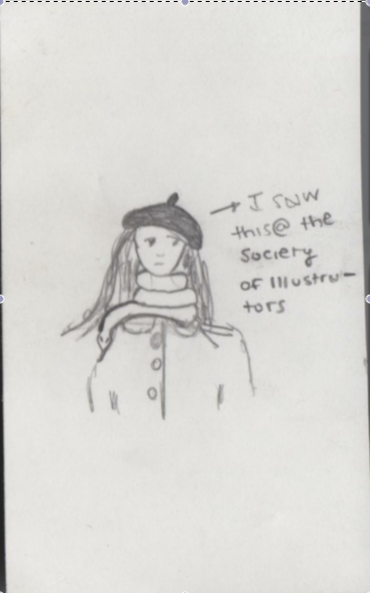
Years ago––probably six or seven?––I was walking by the Society of Illustrators on the Upper East Side when I saw some very charming drawings posted outside.  One of them was of a girl wearing a snake as a scarf.  I tried to recreate it.  It’s only kind of terrible.

Screen shot 2014-06-02 at 8.55.54 AM

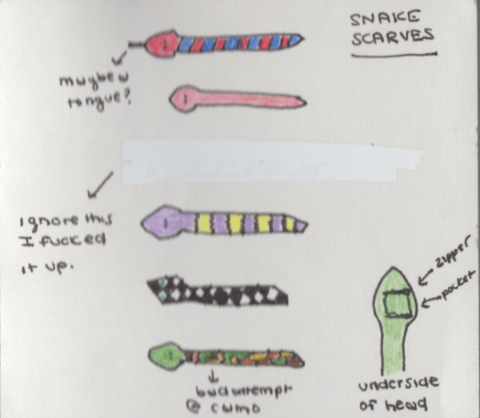
Ever since, I’ve been obsessed with the idea of someone making scarves in the shape of a snake.  I’ve done some mock-up designs (you’re welcome!) but I think the prints could most certainly be improved upon.  If you’d like to buy the design for me (oh, it’s copyrighted, bitches) please contact Siobhan.

Tongue and pocket optional

Tongue and pocket optional

Oldie But Goodie

June 1, 2014

While cleaning out my desk, I found an index card on which I had written a bunch of random phrases, the origins of which I could not remember.  My favorite of the bunch was “I’ve said a hundred prayers to her knees.”  I knew it wasn’t Roethke, but it made me feel like Roethke, which was a good thing, so I went in search of it.  Google came up with nothing until I added in the quotation marks.  Apparently it’s from a poem by Major Jackson (good name, eh?) that was in issue ten of Memorius, a journal of fiction and poetry.  Enjoy!

 
“Even Strangers Are Not Strangers”

Winter’s early evening, and I pull two duvets like clouds

of moonlight above our shoulders. Our bodies fall into formation.

Even the lamps are spellbound. I’ve said a hundred prayers

to her knees, and now, I’m at work beating drums for our future,

making a ceremony of my dark, firm hands.

Outside, thick skeins of black branches sway woozily.

I’m thinking of the last orange red apple I bit into, thorn bushes,

and wooden scented vineyards in Sardinia, charms beneath

fingernails. What color is that cry trickling from her mouth?

In our sacred grove, we leave melodies singing on each other’s skin.

Ida

May 25, 2014

If you run in certain cinephiliac crowds, you might have heard of this slim, haunting, immaculate movie Ida, which I saw Thursday.  Based on some seriously stylish jazz singers who intermittently perform throughout the flick, I’m thinking of writing something about the history of jazz in Poland.  Or, in lieu of that, I might just ogle singer Joanna Kulig, in all her white doo-wop teddy girl style glory.

Nancy Sinatra, Soviet Bloc style.

Judy Henske, Soviet Bloc style.


Duffy?

Duffy?

This is the best pic of them all.  I WANT TO BE YOU.

This is the best pic of them all. I WANT TO BE YOU.

I have been looking to no avail for the soundtrack for the past two days.  While I tend to that, you should also do yourself a favor and see Ida.  I just watched the trailer for the seventh time and almost cried AGAIN.

Sigh

May 16, 2014

I want this Grace Coddington shirt.

How much?

How much?

I think I’m going to try to draw my own portrait of Grace right now…

I Miss You Every Day

May 13, 2014

I really wanted to post something original––I have an okay original essay that I shopped around a bit and might slap up here––but when I came across this anecdote about Sylvia Beach, doyenne of the original Shakespeare & Co., my most special home, I just couldn’t resist sharing it.  Background: this take place during the Nazi occupation of Paris, obvs.

“My German customers were always rare, but of course after I was classified as ‘the enemy,’ they stopped coming altogether––until a last outstanding visit ended the series.  A high-ranking German officer, who had got out of a huge gray military car, stopped to look at a copy of Finnegans Wake.  Then he came in and, speaking perfect English, said he would buy it.  ‘It’s not for sale.’  ‘Why not?’  My last copy, I explained.  I was keeping it.  For whom?  For myself.  He was angry.  He was so interested in Joyce’s work, he said.  Still I was firm.  Out he strode, and I removed Finnegans Wake from the window and put it safely away.

“A fortnight later, the same officer strode into the bookshop.  Where was Finnegans Wake?  I had put it away.  Fairly trembling with rage, he said, ‘We’re coming to confiscate all your goods today.’  ‘All right.’  He drove off.

“I consulted my concierge.  She opened an unoccupied apartment on the third floor.  (My own apartment was on the second floor.)  My friends and I carried all the books and all the photographs upstairs, mostly in clothesbaskets; and all the furniture.  We even removed the electric-light fixtures.  I had a carpenter take down the shelves.  Within two hours, not a single thing was to be seen in the shop, and a house painter had painted out the name, Shakespeare and Company, on the front of 12 rue de l’Odeon.  The date was 1941.  Did the Germans come to confiscate Shakespeare and Company’s goods?  If so, they  never found the shop.

“Eventually, they did come to fetch the proprietor of Shakespeare and Company.”