I made this card for my friend. Isn’t it a masterpiece?

Underneath it says, "Inside this square is the (indisputably) most beautiful picture in the world and I scribbled all over it just to PISS YOU OFF! HAHAHA!
I made this card for my friend. Isn’t it a masterpiece?
Underneath it says, "Inside this square is the (indisputably) most beautiful picture in the world and I scribbled all over it just to PISS YOU OFF! HAHAHA!
Would you automatically hate a piece of writing if its final sentence was:
“Everything is in the past now, but the memories will last forever.”
?
“The Most Romantic Thing is Failure,” (2010 – ) in which I cut my hair like Jean Seaberg’s, move to Paris, drink a lot of red wine, meet with minor success as a writer but never really feel respected as an intellectual, die alone and young-ish but still really pretty and attain instant cult stardom.
Original below:
“Any Number of Things at Once, all Contradictory,” (2010) labanotated dance performed in the background of an 18-person dinner party onstage. (http://twitter.com/sotopresentando)

I have coveted so much of your work...
Dearest YDN (Friend who works at Google),
First of all, let me say hello, and ask you how you are? It’s been ages! Part of that is because I’m down in Miami half the year (already in the role of Jewish grandma) and so have not been around when you’ve been out to visit NYC. I miss you, though, and hope you are well and munching on good organic Californian froyo. I’m hoping to get out to San Fran at some point in the next year (this may be wishful thinking, as I have little money and time)…regardless, we’ll cross paths at some point, I have no doubt.
I’m writing on behalf of the Citizens of Gmail, which, as you well know, is pretty much everyone in the world at this point. For the most part, we’re happy with our governing body, pleased with your benevolent mandates and clear, concise laws. You treat our children well, and skirmishes, few and far between, almost never end in fatalities. However, an outcry has arose across the land over the past twenty-four hours. You see, many Gmail peons feel they have been thrown into a whirlwind of confusion by a strange and unexpected addition to their worlds known as BUZZ. The overall consensus, from what I’ve gathered (and with which I agree), is that Google did not properly inform us of the nature of this Buzz feature, nor were we explicitly asked if we wanted the Buzz feature in our browsers. One person did state that she was given the option, but many, many others voiced feelings running the gamut from irritation to downright enmity.
I myself went to a Google Help Page and looked at the instructions for Buzz, but they did not include a section on how to get rid of it (not how to make yourself invisible, or how to make Buzz invisible to you, but how to EXTERMINATE THE BUMBLEBEE.) So naturally when I was prompted to answer whether or not the page was helpful, I said no. A box for text popped up, and I wrote that I wanted to get rid of buzz, but have you ever seen the movie Blindness, with Julianne Moore and Mark Ruffalo? It’s not that good, so don’t Netflix it, but at one point, all the citizens of Any City afflicted with the blind illness are rounded up and incarcerated in an old hospital, and they give them one phone “for emergencies only,” and Julianne Moore keeps calling but eventually they figure out no one is at the other end. So yeah, that’s kind of what it felt like to send a note to Google, Inc.
Google is great. We really do love you for the most part, but people don’t want things sprung on them, you dig? It makes them feel violated, or ignored. If you have any idea how to get rid of Buzz, I will pay good money for that info, or if you have any sway with the high ups in Google (is it an egalitarian microcosm by now?) please communicate to them that their citizenry is discontent, and close to staging a coup. Lock up your women, cause we about to rape and pillage.
Seriously, though, I miss you. Hope you’re well.
Love,
ID
I think my Gchats are funnier than Tao Lin’s! Yeah, that’s right, I went there…
My favorite people to chat with are PS:
ID: graves are not nearly used enough, as works of art
Sorry, but I’ve always been pretty upfront about the fact that Lost is more important to me than my real life.
INVOCATION FOR THE NEW SEASON OF LOST
A poem, by EW.com reader Tom Holland
May Lost be all you hoped for with answers swift and sound;
May the hours ripen quickly and joyfulness abound.
May Juliet not have died in vain with the pounding of her rock
Let Sawyer live free of pain and survive the coming shock.
May Jack and Kate deal with the things that frustrate us so much
And Sun and Jin share a time that allows them love’s fine touch.
Provide us with more moments that shine on Daniel’s mind
Oftentimes these are the clues the viewers need to find.
May Hurley break the ”curse” that follows him around,
Let his spirit salve the cuts our Losties may have found.
Give Sayid a solid peace he so desperately desires
Shield him from the evil plans that Ben tried to inspire.
Let us know where Claire has gone and how she stayed alive
And lead her back to Aaron’s life so motherhood survives.
Help us to remember Charlie’s sacrifice
Let it have more meaning than simply tumbling dice.
Give us a bright future for Desmond and his Penn
If a reboot is in store, let them find their way again.
Protect our dearest friends, the lovely Bernard and Rose,
Explain the young Walt’s powers before the end of shows.
Know we have a special place for Vincent in our hearts
Keep in mind our knees are weak from all the stops and starts.
Tie up the big loose ends like what happened to John Locke
Let us know what happens to the shepherd’s misled flock.
Inform us on the feud that has stained the beach’s soil,
Is Jacob the white light or just the loophole’s foil?
Does the Man-in-Black represent all that is so evil
Or does he just protect the island from upheaval?
But all these questions pale to one from our Lost designers
Are the eyes of Richard A. really natural or guy-liner?
“Can you, like, sum up the last 250 pages for me?” ~RB, on Infinite Jest
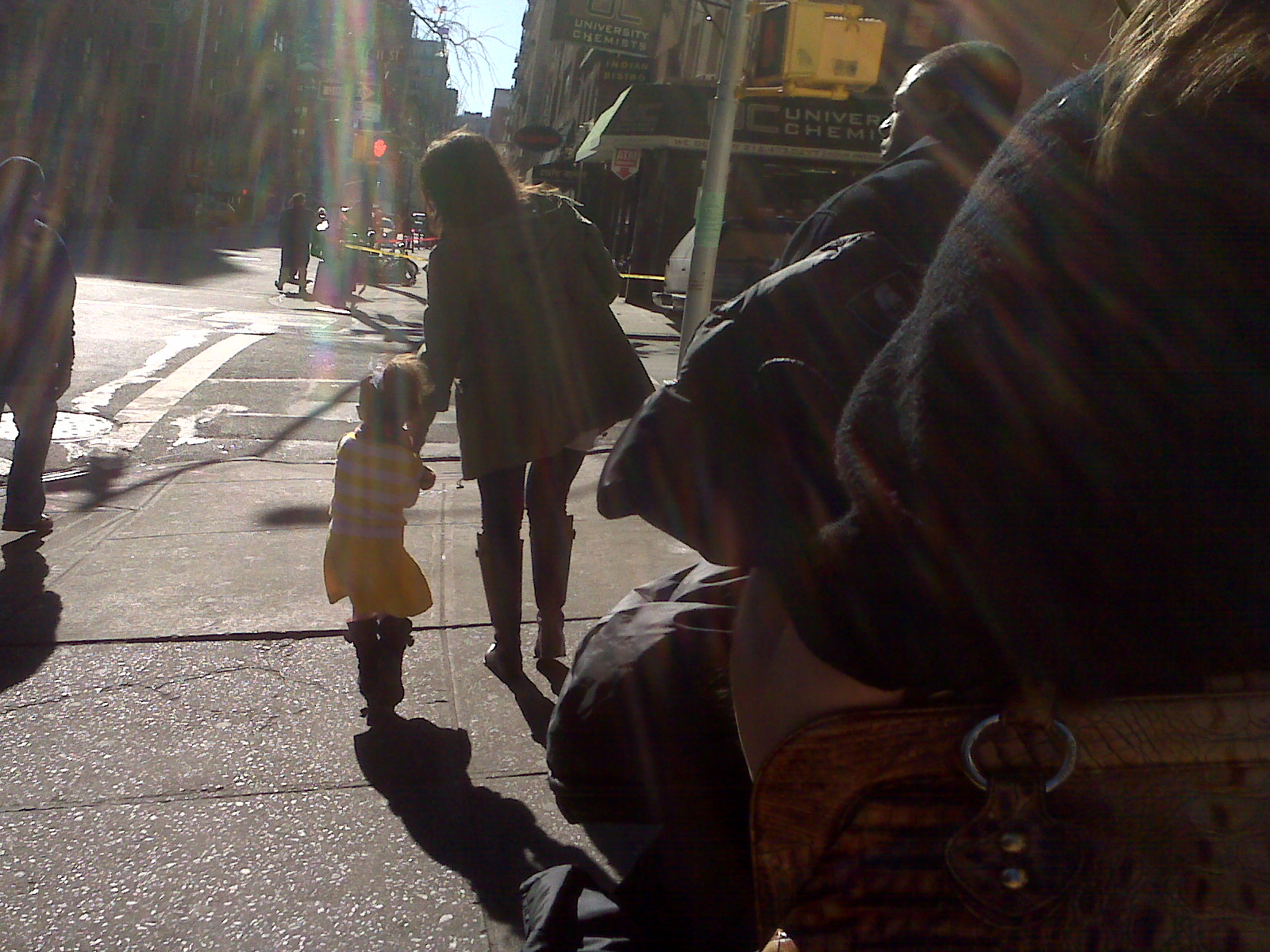
Suri and Katie!
My friend’s little sister just saw the Cruise women at the Grey Dog Cafe on University Place…MH asks, “Why does Suri never wear a coat?” Something Scientology-related?
I do not believe that sex addiction is a real illness. I do not believe that there are any vitamins in Vitamin Water. I do not believe any one person is the subject of Carly Simon’s song “You’re So Vain.” I do not believe in “runner’s high,” nor do I believe it is possible to have fun at a bar when sober. I do not believe in the tenets proposed in He’s Just Not That Into You at all. I do not believe a dog is a man’s best friend and I do not believe all will be forgiven.
Original below…
“I believe in pink. I believe that laughing is the best calorie burner. I believe in kissing, kissing a lot. I believe in being strong when everything seems to be going wrong. I believe that happy girls are the prettiest girls. I believe that tomorrow is another day and I believe in miracles.”
— Audrey Hepburn

