I always get her and Sky Fereirra mixed up. I might have spelled Sky’s last name wrong, but I don’t particularly care because she is pretty boring.
This picture reignites my desire to dye my hair pink.

Yes, still cleaning out my desktop.
I always get her and Sky Fereirra mixed up. I might have spelled Sky’s last name wrong, but I don’t particularly care because she is pretty boring.
This picture reignites my desire to dye my hair pink.
Yes, still cleaning out my desktop.
Guess what everyone? I’m leaving my day job to blog full-time! (Sorta.) This means I have start cleaning out the folders of random jpgs and writings I have amassed in my nine months at this desk. Step one: bye-bye, Secret Snow.
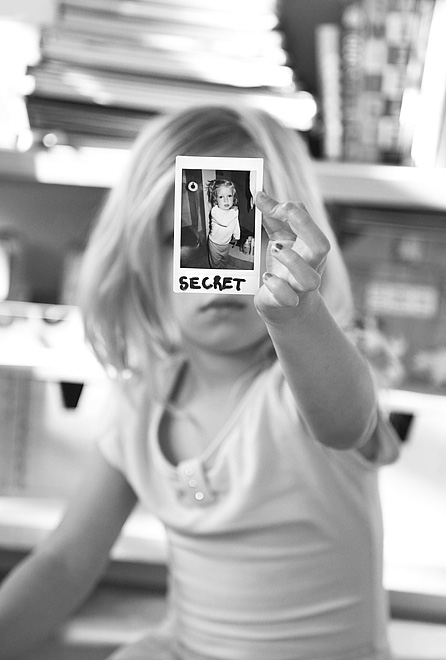
She’s already developing her artist’s instinct.
With a little ingenuity, you too can look like the Sartorialist’s photographic subjects!

Sheer white polka dot ankle socks, available at Free People.
“The Traumhaus was highly selective. According to a Trumpet survey, one out of three Trudians felt that they could benefit from a stay there, but the ratio of admission was much lower than that––a far cry from the somewhat sluttish admissions policy at Trude U. The whole process was shrouded in secrecy. There is no clear science to it. Sociopaths, schizophrenics, the baroquely mad, were not admitted. Adolescents were not admitted. Illiterates were not admitted. Religious fanatics were not admitted, unless they had personalized their delusions in some compelling way. The average old were not admitted. Contented people were generally not admitted, though there were some exceptions. Typically depressed middle-aged males were not admitted. My own application to the Traumhaus, honed in the wake of Molly’s disappearance, had been classified in this last category. It still stung. I consoled myself by using my visiting privileges three times a week. The Traumhaus seemed to be the only place where I could find peace. In the autumn its birches turned yellow and burnt orange, complementing the dark green of the pines almost too well.
“To the charge that it was an ‘elitist institution,’ the Traumhaus responded with tranquil silence. As the reflection of the building in its pond suggested a castle, an element of gentility clung to the place. Though I might feel privileged each time I passed through the double doors, there was a sense in which I remained excluded, unselected. Some who had been living at the Traumhaus for years continued to feel this way at times. This largely had to do with the presence of the so-called Pinkies, a select caste within Traumhaus culture. They were special beneficiaries of Bernhard’s will. It was easy to recognize them by their distinctive shuffling step, their looks to devastation, and the pink bathrobes they wore at all times––markers of a twenty-four-hour suicide watch. These pampered disconsolates wore clear plastic slippers and received their breakfasts on silver trays. They occupied the best rooms, overlooking the pond: the Robert Walser Room, the Klaus Mann Chamber, and the Schreber Suite, where Bernhard had spent the last months of his life. Pinkies were a rare sighting in the Wittgenstein Lounge or any of the other public areas. When they passed, slippers squeaking on the linoleum, the other residents went silent and gawked at these suffering virtuosos––increasing, one can only imagine, the burden of disappointment and loneliness that had made them Pinkies in the first place.”
~Eric Lundgren, The Facades
Whatever Wednesday!
Even though I now know that the moon doesn’t cause psychosis, I still want this phases of the moon cuff.

I’ll send you my shipping address.
Prepare for me to sound very self-important in this post, or at least drop a bunch of terms that are designed to not-so-subtle way to inform you that I am important:
My agent was brainstorming things I should write about or muse on because my thoughts are just SO in demand, and she came across the above-titled excellent manifesto, which was written in the late ’90s by a French art collective called Tiqqun Tiqqun. The manifesto seeks to explain the imperialist system’s creation of an eternal adolescent female as the ultimate consumer. It’s kind of frightening to read it when you have some Young-Girl qualities yourself, or were perhaps a quintessential Young-Girl once, but then again, it’s very Young-Girlish to see yourself in everything, so I’m just trying to not let it drive me to endless introspection. You can download the whole thing here. An excellent portion:
“The Young-Girl enjoys speaking of her childhood with great emotion, to suggest that she hasn’t gotten beyond it, and that fundamentally she’s remained naive. Like all whores, she dreams of innocence. But, distinct from them, she demands to be believed, and believed sincerely. Her childishness, which is, in the end, but a fundamentalism of infancy, makes her the most cunning vector of the general infantilization.
For the Young-Girl, even the meanest sentiments still have the prestige of their sincerity.”
I am fucking. riveted.
1. This lingerie is stunning.

It’s called the “Fuego” set.
2. Is it just me or is Miranda July’s latest “art” project just an extended, highbrow version of the weekly photo montage in Us magazine entitled, “Stars! They’re Just Like Us!”?
For a 4th of July party…
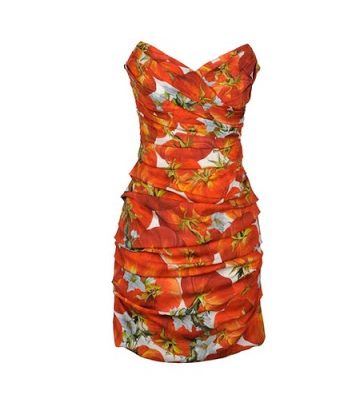
Vegetable Dress!
Also, have been thinking about making a thimble hat––like, a really big thimble you just plop on top of your head. Kind of like a fez. Siobhan will be taking pre-orders.
Yes, yes, of Mrs. Doubtfire fame––I used to have a tiny grudge against her because I feel like she stole my chance at stardom by being cast in the Miracle on 34th Street remake (we’ll discuss over drinks, M) but now I kind of have a friend crush on her, to the point where I ALMOST DRUNK JOINED TWITTER TONIGHT AND DRUNK TWATTED AT HER to respond to the following post on her blog. Excerpt:
When I was a child, Saturday was my least favorite day of the week. The Jewish sabbath day is supposed to be a day of rest, but to a child, rest is boring and boredom is death. We couldn’t turn on the radio or computer, and TV was strictly off-limits. 1 We had to go to temple and listen to prayers in another language for hours, which hardly appealed to me: I was a conscientious kid, but apparently not a very spiritual one. There was only one upside, and that was that my mother’s loose interpretation of “rest” meant we could have candy. She was strict about our sugar consumption during the week, but come Saturday, candy, cookies, and sweets of all kinds were no longer off limits. Judaism’s laws against eating milk with meat also meant we were allowed to eat chocolate before dinner. Jelly beans and gelt were given out in Hebrew School, and going to a Bar Mitzvah meant getting to eat the gummy candies that had been thrown at the boy who had just become a man. Every Sunday was spent in a sugar hangover.
There was little I wouldn’t do for candy in those days, and my peers were similarly desperate. We lived for candy-rich holidays like Halloween, Easter, or Purim, and teachers regularly bribed us with Warheads (which were sour until they were sickly-sweet) and Blo-Pops (which were far superior to Tootsie Roll Pops). It was pure cruelty when a substitute teacher bribed my class with two caramels, saying she would give them to the two quietest, most studious students of the day. 2 My parents also didn’t allow me to have candy on set, for fear I’d get too hyped up on chocolate and sugar and then crash when I needed to be focused on acting. This meant that every night, as soon I wrapped, I would raid the Craft Service table. We filmed Matilda an hour away from Burbank, and I often spent the nightly car ride back home in a backseat sugar orgy so shameless and desperate Lou Reed could have written a song about it.
My tweet was going to be:
@marawilsonwritesstuff –– watch Seinfeld’s bit about candy immediately if not sooner.
Mara if you read this, email Siobhan to set up drinks.
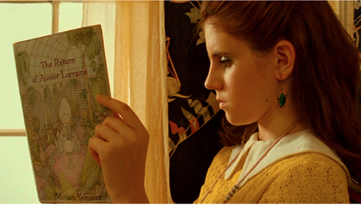
Le freak c’est chic.
After I saw Moonrise Kingdom––which I consider to be Wes Anderson’s most successful movie in years––I looked everywhere for dead beetles with which to recreate the earrings that Sam makes for Suzy.
But sadly, all I could find were the wings of the beetles, and earrings made out of them, which were far less exciting than what I had envisioned.
But today, I got an email in my inbox commemorating the Evolution Store’s 20th anniversary (mazel!) and, intrigued by the maroon version of their signature tote, decided to give the e-stock a second look. AND I’m not sure any of the options I’ve come up with are perfect, they’re as close as I’ve gotten so far. You can buy me whichever one you think is the closest.

Sagra Femorata
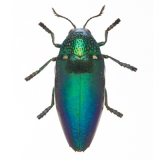
Sternocera Aqui

Chrysina Beyeri
 Itinerantdaughter's Blog