“This is what the inside of my mind looks like: it’s a skinny white room with wide-planked floors and four windows, one on each wall. In the middle of the room is a nineteenth-century, elaborately carved double-pedestal desk, stained black. It’s a real eyesore. The room is in an old farmhouse, and the farmhouse sits in the middle of a great green field. It’s so quiet there. Inside the farmhouse, I stay so still I forget I exist. I barely make a ripple.”
Archive for the ‘I Hate Writing’ Category
A Fictional Brain
June 18, 2012TO DO LIST
June 11, 20121. Update to do list
Gnight!

No, I’M Banksy!
Mine
June 1, 2012I have an article posted on a site I really do like, but the editor edited it quite a bit. I’m fine with the way it is for the purposes of the site, but I do like my original version very much, so here it is!
—
For many people, particularly those who live in liberal Western cultures, the concept of religious uniforms is as simple as a black burqa: the pious pare down their clothing to the least colorful and individualizing pieces in order to humble themselves before their God. As is widely decried by feminist scholars, women in religiously observant societies are more often the ones affected by these sartorial limits. But like most practices viewed as wholly restrictive, the rules of modest dress for religious women, and the way these women operate within the system, often illuminate more than they hide. Instead of just eliminating choice, the limits highlight it; the echoes of the smallest fashion decision reverberate and we discover the arena of costume, even for the Chasidish or Muslim female, is not a void but a canyon. Perhaps no other film in recent history has harvested more meaning of the subtlest of costume differences than Ashgar Farhadi’s A Separation. In this sense, the movie says more about clothing in film (and the world in which we live) than any ornate period drama or futuristic war story populated by metal-clad aliens ever could.
In the second scene of the movie, Simin, played by the excellent Leila Hatami, is packing up her belongings. She’s moving to her parents’ house because her husband Nader (Peyman Moadi) refuses to leave Iran in order to give their young daughter Termeh a better life. Termeh stands at the threshold of what was until that very moment her parents’ bedroom and watches as Simin counts money and stuffs books in her bag, then unceremoniously exits. The final shot of her departure is simple: a steady view of her profile as she drives her car away from her family home wearing a hijab and a pair of sunglasses to shield her eyes from the Tehran sun. The sunglasses are a standard brown with big, rectangular lenses –– nothing terribly noteworthy, but there is one remarkable thing about them. Blink and you’ll miss it: in casual, tiny script on the arm is written the name Ray-Ban. Already, this brand name has communicated to the audience a great deal about Simin’s character. We know she is middle-class, relatively modern, and adventurous, or at least she wants to appear that way, as if she is calmly but certainly following the command dictated by the Luxottica Group: “Never Hide.”
Simin is almost immediately contrasted with the figure and clothing of Razieh (played by Sareh Bayat) who has come to interview for a position as a caretaker for Nader’s senile father. Whereas Simin’s outfit, aside from the head covering, could pass for that of a Bryn Mawr sophomore who shops for simple, earth-toned clothing at Madewell, Razieh’s is more of what we in the west think of typically as Islamic garb. Her hijab –– black and without embellishment compared to Simon’s fern-colored crepe de chine one –– is carefully folded so as to not reveal even a sliver of her neck or a stray strand of hair. We at once recognize her as the gloomy, oppressed woman in contrast to the enlightened, liberated one. (Indeed, even Razieh’s facial features are more stereotypically Arab, whereas Simin, with her sharp cheekbones, light complexion and few strands of red hair peeking out from beneath her hijab, looks physically Aryan.) Razieh listens timidly as Nader explains the tasks that comprise the job. Next to her mournful figure stands her four-year-old daughter, Somayeh, who wears a white hijab (child-friendly and easily held in place thanks to an elastic insert.)
It is jarring and yet humbling to watch the film as a Westerner; what is most shocking, when one considers oneself a liberal citizen of the world, is to find that ignorance can still lurk within. Throughout the movie, the hijabs and chadors (enveloping cloak worn on top of the hijab that usually is long enough to reach the ground) of the women oftentimes seem to be perched precariously atop their heads. Sometimes they don’t wrap the long ends of the scarves around their necks but let them dangle toward the ground as if Rapunzel-esque strands of hair themselves. Occasionally they even use them as props for dramatic effect. When Simin storms out of the house after one particularly bad row with her husband, she takes one end of her colored hijab and tosses it over her shoulder the way a mean girl in a high school cafeteria may “flip” her tresses to assert her dominance, her lack of caring. It can be thrilling, and a little scary, to watch those thin pieces of cloth threaten to whip away with the wind and leave the woman’s hair uncovered. One is surprised that nary a male in the whole film ever chastises a female for being immodestly dressed or not tying their hijab tightly enough, but then one chastises one’s self for such a strict view of Muslim society. Of course not all women are subservient. Of course jeans are allowed. Of course they can wear Ray-Bans. (These sunglasses, interestingly enough, have a long history in Iran. They were so popular, particularly in the port city of Abadan, that in the southern region of Iran “ray-ban” became the generic term for sunglasses.)
Indeed, the female characters are the most mesmerizing; the male characters, though integral to the plot and brought skillfully to life by the actors, are mostly negative space. Part of the reason for this is the garb the women wear and the attention that it ironically draws. In attempting to subsume, to blight out the form of the female, in many ways, the traditional Muslim tenet to cover the body with as many layers as possible just ends up dramatizing and emphasizing the body underneath and the movements it makes. Take the example of Simin’s hijab, above, or of Razieh when she storms out of the house after an altercation with Nader. In this pivotal scene, Termeh, a seriously perceptive young girl, opens the door and sees, from above, Razieh as she rushes down the stairs, her long, night-black chador streaming behind her. The chador’s rippling in the air gives Razieh the appearance of a boat speeding through the water, leaving a wake behind it. The women, therefore –– who ought by religious and civil law to be as close to non-entities as possible –– become partially by virtue of their dress the most compelling figures. One searches for clues to their lives, private and societal, in their clothing –– the nearly-indigo luminescent hijab worn by a cold Simin as she confronts her husband, the layers of what appear to be hospital bedding that a shameful and afraid Razieh swaddles herself in during a confrontational moment with her husband, the deep blue school uniform worn by the budding teenager Termeh, even the glimpse of the ever-recognizable signature Burberry tartan lining a teacher’s jacket at Termeh’s school. The variety of clothing worn by a group considered to be oppressed in a country considered to be the harshest of theocracies upholds, in this case, the film’s thesis: that life, wherever and whenever, is complicated, unpredictable, and above all, layered.
Perhaps one of the most sartorially interesting moments for these actresses occurred not in the film at all, but on the red carpet. This past February, A Separation became the first Iranian film to win Best Foreign Language Picture at the Academy Awards. Leila Hatami and Sarina Faradi, who played Termeh, were both present at the ceremony. Both wore modest, long-sleeved gowns, Leila in sky blue and Termeh in black. Both of them wore their long hair down and their hijabs pushed way toward the back of their heads, and as the women clapped when writer/director Ashgar Farhadi collected the award, it seemed inevitable that the hijabs would slip off, but they never budged at all.
—
Me All the Time
May 31, 2012
Seriously. It drives me nuts.
List of Jobs I Think I Should Have
May 29, 20121. Therapist-patient matchmaker
2. Washing oil off of baby animals affected by oil spills a la that Dawn commercial
3. “cool hunter” (coolhunting.com)
4. Babysitting sequestered jurors
5. bibliotherapist
6. Obituary writer (new favorite)
7. “Phenomenologist”
8. Reading letters sent by readers to various magazines/publications and deciding which ones should be printed
9. Driving the Monsey Trails bus
10. Writing those “36 hours in…” pieces for the Times
11. Night watch person at Greenwood Cemetery
12. Watching movies and transcribing the dialog and then selling the bootlegged scripts on the street
13. Seat filler at the Oscars
14. Performance artist who lies in that wooden bed with a crystal pointed downward made by Marina Abramovic
15. Cat tamer at the Hermitage Museum (you’ve probably seen my cover letter already)
Two Cool People
May 23, 2012As I mentioned before, I am reading some books put out by London’s The School of Life, and by skimming this latest, How to FInd Fulfilling Work, I have been introduced to two bombass guys whose lives and careers I would like to have. First up, the author, Roman Krznaric:
Roman Krznaric is an author, cultural thinker, and founding faculty member of The School of Life, where he teaches courses about work. He has been named by the Observer as one of Britain’s leading lifestyle thinkers, and advises organizations including Oxfam and United Nations on using empathy and conversation to create social change.
Next, Krznaric’s pal, Iain King:
“Iain King has never been conventional. When he left secondary school, he spent a year busking around Europe –– playing the guitar standing on his head. One summer while at college in the early 1990s, he and a friend crossed into northern Iraq from Turkey, where they befriended a group of Kurdish freedom fighters, travelled around with them in a Jeep full of machine guns and hand-held missile launchers, and narrowly escaped being kidnapped. Later, Iain started up a national student newspaper, which folded after half a dozen issues, then volunteered as a researcher for a political party. Never having had much of a career plan, he ended up as a an expert on peace-building for the United Nations and other international organizations. He helped introduce a new currency in Kosovo and has worked alongside soldiers on the battlefront in Afghanistan. He has also found time to write a philosophy book, and to spend a year as a househusband and Syria, the lone father at baby groups in the Damascus expatriate community.”
It goes on to say that Iain’s current job, as a civil servant advising the British government on their overseas humanitarian work, is less-than-fulfilling, but for now, I’m content to imagine Iain as a happy, physically flexible do-gooder with a sweet Syrian bride.
Captioning Cindy Sherman
May 21, 2012My boyfriend and I went to the MoMA yesterday to see the Cindy Sherman show, and I decided to spend my time making up captions in my head for the pictures. This could be its own Tumblr, but I’m in the mood to keep things simple.
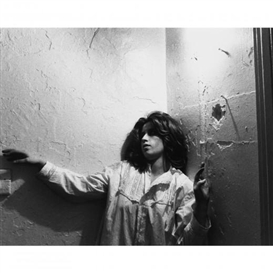
When Myrna awoke from her alcohol-induced coma, she had only vague memories of stumbling into the basement in search of snacks.

Krystal was beginning to get worried –– could she continue to pass off her new spare tire as the result of “too many Twinkies?”

Even though Marina packed to leave him six times a week, Richard never worried. She was such a drama queen.
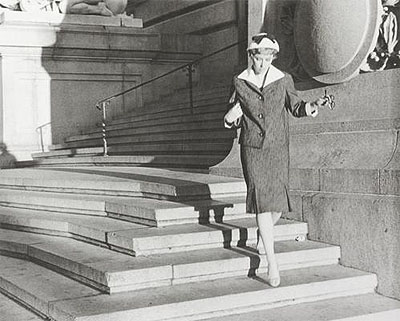
Yes, Tanya was happy her annulment went through, but somehow she wasn’t quite as light in her step as she had anticipated.

Olga was done cleaning kitchens for rich housewives who took naps with cucumbers on their eyes while she scrubbed. She was going to be an ACTRESS.

After her relationship with the tattoo artist Joe “Psych Ward” Jones ended, Melissa really went off the deep end.
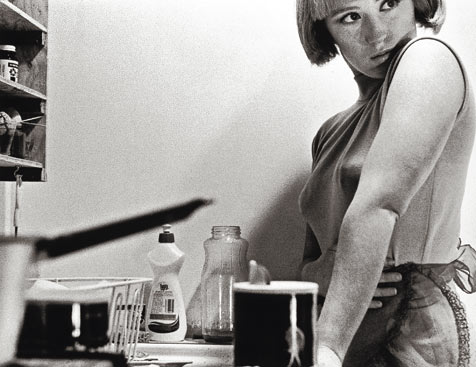
Inez always did the dishes while Todd watched basketball, but that was going to stop.

Jamie didn’t care what her friends said –– she loved partying with her daughter in Boca!

Right at 37th Street, Amy realized that the man had been following her for a good seven minutes.

Some day Rae-Lynn would gather the courage she needed to leave that podunk Nebraska town. Some day…

Annabelle had reigned Meriwether Estate with an iron first, even as the rest of her family left for the city and the house began to crumble around her. Her heart was as hard as the Italian marble used for the steps to the mansion, but a mysterious stranger would soon arrive at the Estate and change it, and Annabelle, forever.

Dammit! Jennifer was always trying to destroy Monica’s buzz!

Lola wanted her love interest, who worked at the docks next door, to notice her, but she didn’t want to seem OBVIOUS.

Esther was afraid to die, and she covered her fear in cashmere.

Misty really turned it on for the Asics people. She just couldn’t understand why her winning smile and her 4th place at the 1976 Olympics didn’t seal the endorsement!

Meredith was just hoping none of the other library patrons would see her reaching for FEAR OF FLYING.
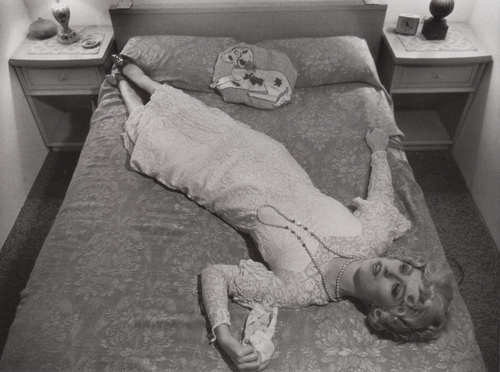
- The sex was raunchy and satisfying, but somehow, back at home, it all seemed meaningless to Lara.
Trying to Work on a Piece About Fiona
May 18, 2012Is it coalescing? I can’t tell. (After some thought, the answer is “no.”)
Also, why don’t my GIFs move naturally? If you click on it, she’ll lick her lips.

I Need Trow Now
May 15, 2012I’ve been at work for all of an hour and I’ve already seen five Internet things that make me kind of want to die (“13 Pictures of Writers in Funny Outfits,” “Babies in Car Seats Sing Hipster Song,” “Umpteenth Photographic Montage of Pretty Designers in Their Pretty House”) and to help me NOT want to die, here’s a little GWST, which gives me strength to brush aside my distaste for trivial information (trinfo.)
THE AESTHETIC OF THE HIT
The comfort was in agreement, the easy exercise of the modes of choice and preference. It was attractive and, as it was presented, not difficult. But, once interfered with, the processes of choice and preference began to take on an uncomfortable aspect. Choice in respect to important matters became more and more difficult; people found it troublesome to settle on a mode of work, for instance, or a partner. Choice in respect to trivial matters, on the other hand, assumed an importance that no one could have thought to predict. So what happened then was that important forces that had not been used, because they fell outside the new scale of national life (which was the life of television), began to find a home in the exercise of preference concerning trivial matters, so that attention, aspiration, even affection came to adhere to shimmers thrown up by the demography in trivial matters. The attraction of inappropriate attention, aspiration, and affection to a shimmer spins out, in its operation, a little mist of energy which is rather like love, but trivial, rather like a sense of home, but apt to disappear. In this mist exists the Aesthetic of the Hit.
Margaret Atwood
May 2, 2012Tonight I am going to see Margaret Atwood speak at the New York Times. I reluctantly must admit I’ve never read any of her books, but I am a fan of her poetry, particularly this one, which is about many people I know.
A Sad Child
You’re sad because you’re sad.
It’s psychic. It’s the age. It’s chemical.
Go see a shrink or take a pill,
or hug your sadness like an eyeless doll
you need to sleep.
Well, all children are sad
but some get over it.
Count your blessings. Better than that,
buy a hat. Buy a coat or pet.
Take up dancing to forget.
Forget what?
Your sadness, your shadow,
whatever it was that was done to you
the day of the lawn party
when you came inside flushed with the sun,
your mouth sulky with sugar,
in your new dress with the ribbon
and the ice-cream smear,
and said to yourself in the bathroom,
I am not the favorite child.
My darling, when it comes
right down to it
and the light fails and the fog rolls in
and you’re trapped in your overturned body
under a blanket or burning car,
and the red flame is seeping out of you
and igniting the tarmac beside you head
or else the floor, or else the pillow,
none of us is;
or else we all are.
 Itinerantdaughter's Blog